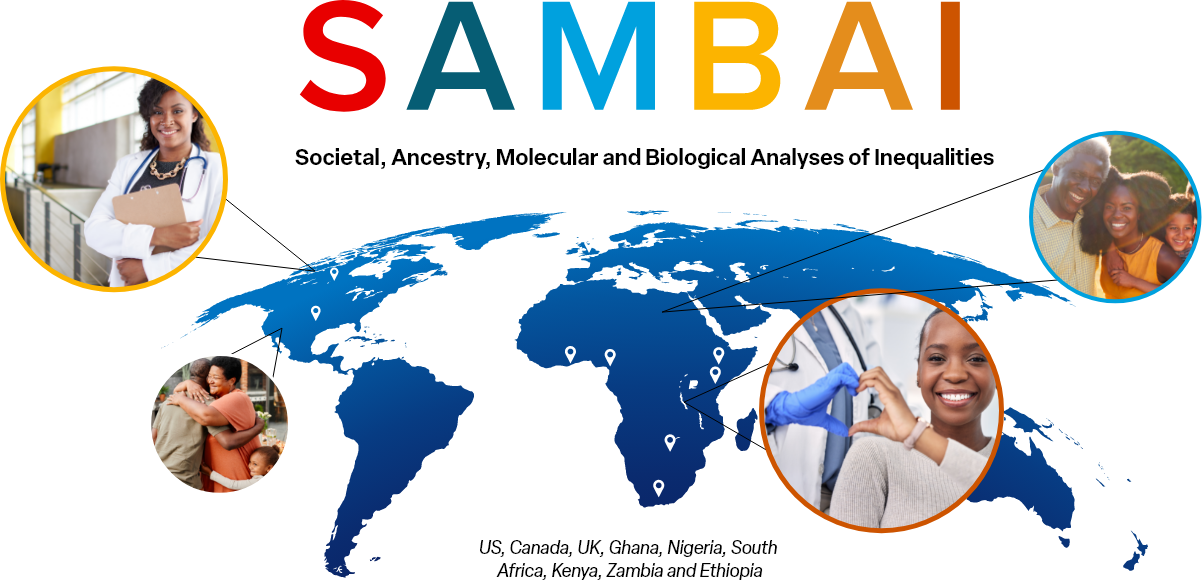
A family of scientists, advocates, and community working towards
a healthier future for the African diaspora and for ALL...
“We are the science we have been waiting for”
Join SAMBAI cutting-edge cancer disparities research to improve outcomes for breast, prostate and pancreatic cancer and build a healthier legacy for all.
SAMBAI is a groundbreaking five-year research study funded by Cancer Research UK (CRUK) through the Cancer Grand Challenges initiative. Our mission is to uncover why breast, prostate, and pancreatic cancers affect people of the African diaspora at disproportionately higher rates than those of European descent.
What makes SAMBAI truly unique is its collaborative approach — bringing together world-class scientists across multiple disciplines and centering the voices of patients and communities. Together, we are redefining how cancer research is done by ensuring that those most impacted help shape the science that seeks to save their lives.
Are you a breast, prostate, or pancreatic cancer patient
or someone looking to make a difference in cancer research?
OUR WHY
When cancer research does not include us, it cannot fully serve us.
The vast majority of people who participate in cancer research are white. There is not enough research to help us understand why our communities are impacted by cancer differently.
Did you know...
Black people have lower survival than White people for almost every cancer type (American Cancer Society, 2024).
Black men have the highest prostate cancer rates in the world—with ~67% higher incidence and 2× higher mortality than white men in the U.S.
Between 60%–70% of women in African countries are diagnosed at a late stage of breast cancer, and only one in two women diagnosed with breast cancer in sub-Saharan Africa will survive five years.
Meet our Research Groups
Team SAMBAI is a collective of five research groups, including globally recognized scientists and patient advocates of various skillsets and backgrounds. We have joined forces with the common goal of closing the cancer health disparities gap.
(WP1) Social Determinants of Health
Studies the conditions in the environments where people are born, live, learn, work, play, worship, and age that affect a wide range of health, functioning, and quality-of-life outcomes and risks.
>
(WP2) Genetics
Studying people’s genes (segments of DNA) and heredity (traits passed down from parents to their children).
>
(WP3) Genomics
Studying a person’s entire genome (complete set of genes in a cell), a “genetic blueprint” to see how all genes interact with each other and the environment.
>
(WP4) Exposomics
Studies all of the environmental exposures a person comes into contact with throughout their life and how they affect health (for example: poor air quality due to pollution or poor water quality due to mining).
>
(WP5) Patient Advocacy/Involvement
Studies and enhances the patient experience by driving informed awareness, education, and meaningful participation in research. We ensure the patient voice, perspective, and needs are embedded in every SAMBAI work package—making our science truly people-centered and grounded in cultural humility and respect.
SAMBAI
Societal, Ancestry and Molecular Biology Analyses of Inequalities